> Short answer: The majority of the requirements for installing a lift in a residential building are, generally speaking, 3/5 of the owners and their shares (art. 17.2 LPH, 2026). But if the work is for accessibility and someone over 70 years old or with a disability lives in the building, it is sufficient simple majority and it can even be mandatory without a vote when its cost does not exceed 12 monthly payments. Once the agreement is approved, everyone pays.
If you're wondering how to get the lift working in your building, the first thing you need to know is what majority to install a lift in the community of neighbours The law requires it, and how to bring the matter up at the board meeting. The short answer is above; the long answer depends on one detail that changes the whole process: whether the lift is a simple improvement or an accessibility project.
This distinction determines the number of votes needed for the lift, who is obligated to pay, and to what extent opposing neighbours can halt the project. This guide explains, step by step, how to approve a lift at a homeowners' association meeting, how the cost is divided among residents, and what to do immediately after the vote. If you're looking for specific figures, this article focuses on the process and the votes, not in the budget.
What majority is needed to install a lift in a residential building?
The general rule is clear: installing a lift as an improvement requires the approval of the 3/5 parts of the owners who also represent the 3/5 of the quotas of participation. It is the qualified majority established by article 17.2 of the Horizontal Property Law. It is not enough to raise your hand: people and shares count.
Here it is important to distinguish between two scenarios that people often conflate. When the lift is proposed for convenience—the building is functional, but the residents want to improve access—the 3/5 majority requirement of article 17.2 of the [relevant legislation] applies Horizontal Property Act. This is common in many buildings in Palma and throughout Mallorca where there has never been a lift.
The second scenario changes the rules. If the installation is a accessibility work to remove architectural barriers, Article 10.1.by comes into play, allowing for less stringent majorities and even making it mandatory. We'll examine this in detail below, as it's the approach that resolves most neighborhood disputes. Before deciding which path to take, it's worth reviewing the relevant information when it is mandatory to install a lift depending on your specific case.
How to approve a lift at a homeowners' association meeting step by step?
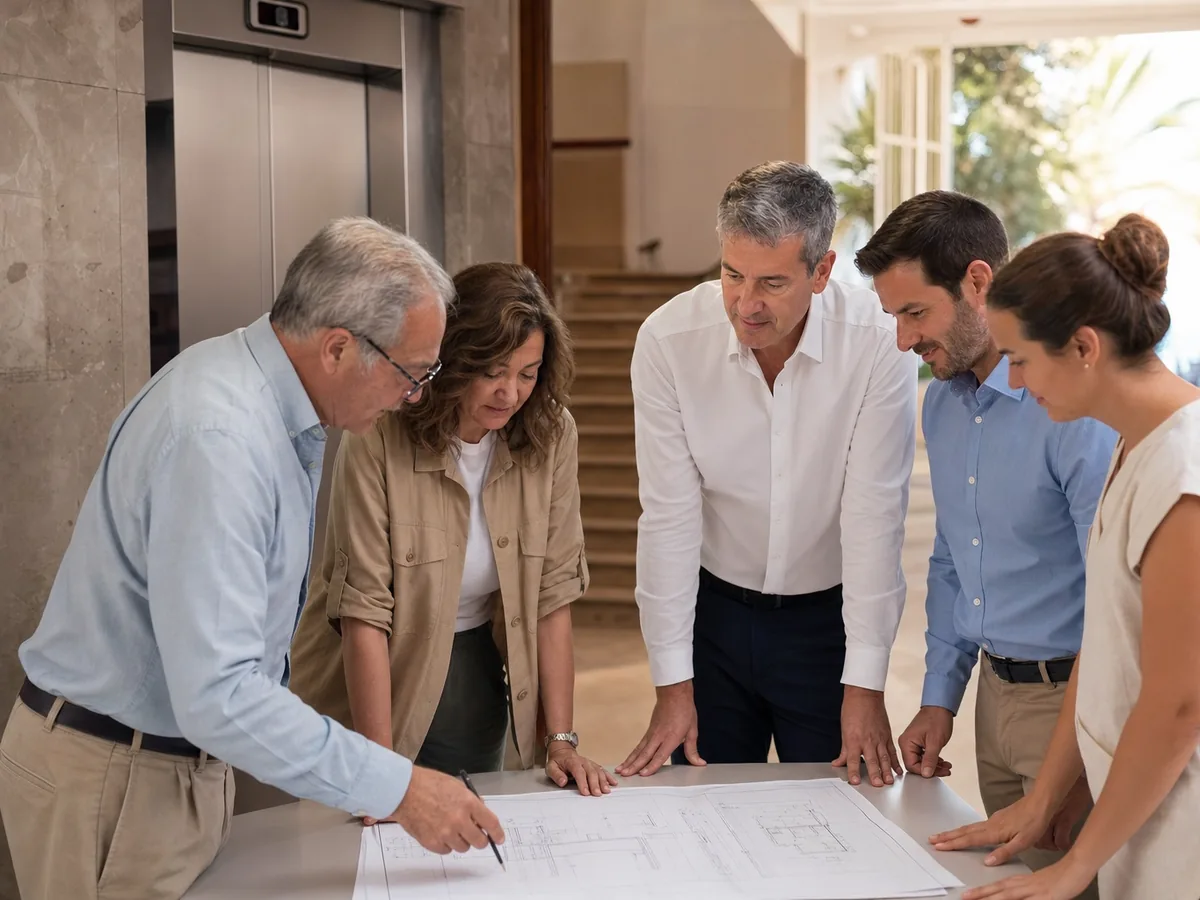
Approving a lift at a community meeting isn't just a matter of voting: there's a procedure, and skipping a step can invalidate the agreement. This is the order we follow with the communities we advise in the Balearic Islands, from the initial idea to the signed and enforceable minutes.
- Request the inclusion of the item on the agenda. Any owner can request in writing to the president or administrator that the lift be included in the meeting notice.
- Call the meeting with sufficient notice. The notice must reach all owners with the date, time, place and the specific point of the lift.
- Present at least one budget. He arrives at the meeting with a clear technical and economic proposal so that the residents can vote on something tangible.
- Vote for the agreement and count carefully. Verify that the required majority is reached in owners and in quotas; both requirements at the same time.
- It counts the votes of those who are absent. Absent owners who have been duly notified and do not object in writing within 30 days join the majority opinion.
- The agreement is reflected in the minutes. The signed document is the document that makes the installation and the distribution of the expense executable.
- Notify everyone and choose an installer. With the valid agreement, the community is notified and the company that will carry out the work is contracted.
Step 5 is the one that silently wins the most votes. The truth is that many projects are approved thanks to those who are absent, who, by not objecting within the deadline, end up voting in favour.
What is the majority under each assumption? Table of votes required
It depends on the type of work and who lives on the property. This table summarises the four most common scenarios so you can see at a glance which majority you need and whether the work is mandatory or not.
| Supposed | Legal basis | Majority required | Mandatory? |
|---|---|---|---|
| Lift as an improvement (for convenience) | Art. 17.2 LPH | 3/5 of owners and shares | No |
| Accessibility, cost ≤ 12 monthly payments | Art. 10.1.b LPH | No agreement required | Yes, mandatory |
| Accessibility for residents over 70 years old or with disabilities | Art. 10.1.b LPH | Simple majority | Yes, required |
| Accessibility, cost > 12 monthly payments | Art. 10.1.b / 17.2 LPH | A simple majority is required to demand it; 3/5 is required to distribute the excess. | Partial |
The threshold of the 12 monthly payments It is the linchpin of the entire system. If the annual cost per dwelling does not exceed twelve ordinary instalments of common expenses, and there is an elderly person or someone with reduced mobility, the work is directly required. These accessibility criteria are also supported by the Royal Legislative Decree 1/2013 on the rights of persons with disabilities.
When can a lift be installed for accessibility without a vote?
When a person over 70 years of age or with a disability lives in the building and the annual cost per dwelling does not exceed 12 ordinary monthly payments, the accessibility work is mandatory And it doesn't require the support of 3/5 of the owners. It's enough for one owner to formally request it for the community to be obligated to implement it.
This is the lever that most often unblocks projects. A single neighbour with recognised rights can trigger the obligation, and the board no longer votes "yes or no," but rather on how to organise it. If the budget exceeds those 12 monthly instalments, the portion exceeding that limit does require a 3/5 majority vote; and if that is also not approved, the interested owner can cover the difference so that the work can proceed.
In older buildings in Palma with narrow staircases or small courtyards, technical feasibility is also important. Before calling a meeting, a feasibility study is advisable; on our website Installation of lifts in communities we explain how we assess each space. And if you live in a building that's decades old, also check out the key points for installing a lift in an old building in Palma.
Who pays for the lift once it's approved by the community?
Once the agreement has been approved by a valid majority, All owners are required to pay, This includes those who voted against or did not attend the meeting. The distribution is done in proportion to each home's share, not equally.
This surprises many people: simply voting "no" isn't enough to avoid the expense. The Horizontal Property Law (LPH) makes this clear to prevent a minority from blocking improvements that benefit the entire building. What few people know is that this same fee structure is then applied to monthly maintenance, not just the construction work.
There is a nuance. Owners of commercial premises or ground-floor units without access to the building entrance or planned use of the lift may be exempt if the bylaws so stipulate or if the owners' association expressly agrees. To calculate your specific assessment, this article on How much does it cost to install a lift in a residential building? breaks down the investment range by project.
How is the meeting called to vote on the lift?
The meeting is convened in writing to all owners, specifying the day, time, place, and the lift as the specific item on the agenda. If the lift is not expressly mentioned in the notice, any decision made regarding it may be challenged and rendered null and void.
It's a common mistake: the lift is discussed "in passing" at a meeting called for something else, and then the minutes don't support the project. To avoid this, the item should be worded precisely—for example, "approval of the lift installation according to the attached budget"—and accompanied by the technical documentation.
It can be an ordinary or extraordinary meeting; for such a matter, many communities in Mallorca call a specific extraordinary meeting. The property manager usually handles the notice, but any owner can request that the issue be included. When the project gets underway, it greatly helps to work from the beginning with a company specialising in installation of lifts in Mallorca that provides the budget and technical study that the board needs to make an informed decision.
When NOT to force lift approval
It's not always a good idea to push through a vote at all costs. There are situations where it's wise to pause, reconsider, or explore other options before jeopardising the agreement in a poorly prepared meeting.
- When there is no viable technical project. If the shaft does not allow for a standard lift and no alternative has been studied, voting falsely only generates conflict.
- When there is no real budget. Voting on an estimated figure "verbally" opens the door to challenges and uncontrolled spills.
- When the work seriously affects a specific dwelling. If it compromises the habitability of a homeowner without their consent, the agreement may be void.
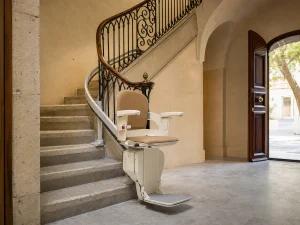
- When the stairlift best solves the problem. In very small or difficult-to-access buildings, it is sometimes more sensible to compare stairlift or lift and decide which one to choose before voting.
However, most of the blocking is due to incomplete information, not genuine opposition. With a good proposal on the table, the board usually approves it.
Frequently asked questions about installing a lift
What majority is needed to install a lift in a residential building if no one is over 70 years old?
If the lift is proposed as an improvement and no one over 70 years of age or with a disability resides in the building, article 17.2 of the LPH applies: the favorable vote of the 3/5 parts of the owners who, in turn, represent the 3/5 parts of the participation quotas. Those absent who do not object within the deadline are also counted.
Can a single neighbour force the installation of a lift in the building?
Yes, in a specific scenario. If that resident is over 70 years old or has a disability and needs the lift for accessibility, they can request the work, and the community is obligated to carry it out when the annual cost per unit does not exceed 12 ordinary monthly payments. Above that limit, any excess requires approval from the board.
Do those who voted against it have to pay for the lift?
Yes. Once the agreement is approved by a valid majority, all owners pay, This includes those who voted against and those who were absent. The distribution is based on each dwelling's share of ownership. The only exception is owners expressly exempt by the bylaws, such as some commercial premises without access to the building entrance.
What happens if a majority vote isn't reached to install the lift?
If the necessary votes for the lift are not obtained through the improvement process, the agreement fails and the work cannot be carried out at the community's expense. However, if there is a resident over 70 years of age or with a disability, the accessibility procedure under Article 10.1.b may make the work mandatory even without the required majority.
How should the lift be listed in the meeting notice?
The lift must be listed as a specific and explicit item on the agenda, with reference to the budget or project being voted on. If it is not clearly stated in the meeting notice, any owner can challenge the decision. Therefore, it is advisable to draft the item precisely and attach the technical documentation before the meeting.
Take the first step with Eleva Balear
At Eleva Balear, we help you prepare for the lift installation process with what truly resolves the issue: a viable technical project and a clear budget for your building. We are a local company based in Inca with over 100 lifts installed in the Balearic Islands, our own 24/7 technical service, and a 99% customer satisfaction rating. We adapt to each building, with transparency and no surprises.
Tell us about your case and we'll advise you on the majority to install a lift in the community of neighbours that applies to your building. Call us at +34 971 17 81 51 or write to us at quierosercliente@elevabalear.com. Experience the feeling of being in good hands.