When moving things or people between different floors, whether in a company, a commercial space, or a warehouse, a common question arises: should I install a lift or a forklift? At first glance, they may seem similar, but they are not. Each has its own function, regulations, and is designed for a specific type of user.
Choosing wisely isn't just about budget. You need to consider what will be moved, how often, who will be using it, and what space is available. Skipping this analysis can be costly later on.
What is each one used for?
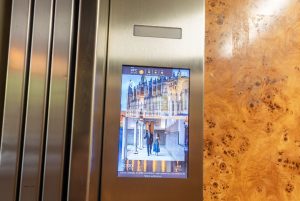
The lift is designed to transport people. That doesn't mean you can't take boxes or bags with you, but its design prioritizes safety, comfort, and barrier-free access. That's why it has lights, ventilation, emergency systems, and a high-quality finish.
The forklift, on the other hand, is designed to carry heavy loads: pallets, furniture, bulky materials… What matters here is that it's durable, safe for the load, and operates without interruption. Visual appeal is secondary.
Which one is best suited to each space?
In homes
In private homes, it's common to install a home lift, especially if there are elderly people living there or if extra comfort is desired. They are compact, quiet, and don't require major renovations.
A forklift at home? Only in very specific cases, such as homes with some commercial use or workshops where heavy objects are moved.
In communities of neighbors
There's not much room for maneuver here: by law, a lift is essential to guarantee accessibility. Replacing it with a forklift is not acceptable.
However, if the building has areas such as garages, storage rooms or maintenance rooms, it may be useful to install a small forklift as a backup, without replacing the main lift.
In industrial and commercial environments
In these types of spaces, the load is the deciding factor. If heavy products are transported frequently, a forklift is the most practical option. It's more durable, lasts longer, and is designed for continuous use.
In hotels, large stores or logistics centers, it is common to see both systems working together: lifts for customers and employees, forklifts to move goods without interfering in the common areas.
Key differences in load and design
How much can they lift?
Forklifts are designed to move anywhere from a few hundred to several thousand kilograms. Passenger lifts, on the other hand, have a lower weight limit because they are designed for people. Using them to move heavy goods is a mistake that will eventually have consequences.
And what about the inside?
The lift pays attention to detail: good lighting, a closed cabin, visible buttons, and a feeling of comfort. The forklift, not so much. It usually has open cabins or cabins with basic finishes, reinforced floors, and anchor points to prevent the load from shifting.
Rules and safety: they are not the same thing
Lifts are subject to very strict regulations: regular inspections, emergency communication, safety sensors, among others. Everything is designed to protect the user.
For forklift, the requirements are different, especially if they won't be carrying passengers. However, it's crucial to understand that a forklift cannot be used like a passenger lift. If it's not certified for passenger use, it can pose legal and physical risks.
Is it possible to ride in a freight lift?
In principle, no. Except for some specific models designed for mixed use, forklifts are not meant for people. And using them that way, besides being dangerous, could get you into trouble if an accident occurs.
And what about costs?
Installing a forklift is usually cheaper than a passenger lift, but that doesn't mean it's the best option in every case. If you need to move people or ensure accessibility, there's no alternative: it has to be a passenger lift.
Regarding maintenance, lift maintenance is more comprehensive because it includes more advanced safety systems. In places like the Balearic Islands, it's best to hire a company that is familiar with the regulations and can guide you through the lift installation process in Mallorca .
Repeated mistakes
Two flaws are quite noticeable:
- Installing a forklift just to save money, without considering the need to transport people, can lead to costly modifications.
- Failing to calculate the actual weight to be moved. If a lift is installed where a forklift is needed, the equipment will suffer and break down more frequently.
How to make the right decision
Before doing anything, we need to answer some basic questions:
- Who is going to use it?
- What weight will it support?
- How much will be moved per day?
- What does the regulation say about your type of building?
With that clear, you can make a decision that not only solves the present, but also works well over time.
What if the building is old?
In older buildings or those undergoing renovation, available space is often a problem. But today there are compact lifts and adaptable forklifts that can be installed without major complications.
If the goal is to improve accessibility, a lift is usually the best option. However, if the building will be used for storage or loading, a forklift is typically a better fit.
Who can help you?
At Eleva Balear, we work on a wide variety of projects, from retail spaces to industrial facilities. We analyze each case in detail to help you decide whether you need a passenger lift or a forklift, without complications or rushed decisions.
If you are in the planning or installation phase and are looking for lift installation specialists in Mallorca, we can assist you throughout the entire process.