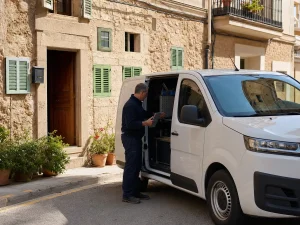
In many older buildings in Mallorca, a common situation exists: multiple floors, residents of all ages… and not a single lift. What wasn't a problem years ago is now, especially when accessibility needs arise.
The question is quite common:
Is there really an obligation to install a lift in an old building, or does it depend on each community?
The short answer is: it depends on the case. But if you want to understand when it is mandatory, who pays for it, and what options exist, I'll explain it to you straight.
Is it mandatory to install a lift in all old buildings?
No. Not all buildings are required to install a lift.
However, there are specific situations in which the law does require the community of owners to do so, even if not all the neighbours agree.
And here's the key.
When is it mandatory to install a lift?
Spanish accessibility regulations have evolved considerably in recent years. The objective is clear: to make life easier for people with reduced mobility.
Therefore, there are cases in which installation ceases to be optional.
1. When requested by a person with a disability or over 70 years of age
This is the most important scenario.
If a person lives, works or provides services in the building:
- With a disability
- Or over 70 years old
The community is obliged to carry out the necessary works to guarantee accessibility, including the installation of a lift if feasible.
This is not a recommendation. It is a legal obligation.
2. When the cost does not exceed certain limits
This is where the economic factor comes in.
The law states that the community must assume the installation provided that the annual cost passed on, once aid or subsidies have been deducted, does not exceed a certain limit in relation to the ordinary fees.
In practical terms:
If the economic impact is reasonable, the installation cannot be refused.
3. When there is aid or subsidies
In places like Palma de Mallorca, it is common to find public funding to improve accessibility in buildings.
This completely changes the scenario.
A facility that previously seemed economically unfeasible becomes manageable. And at that point, the community loses its ability to refuse.
When is it NOT mandatory to install a lift
It is also important to make it clear when there is no obligation.
1. If there are no people with accessibility needs
If no neighbour meets the requirements (disability or advanced age), the installation then depends on the decision of the community.
2. If the cost is disproportionate
When the investment is very high and there is not enough support, the community can refuse.
However, this often generates conflicts, because what is "excessive" can be interpreted in different ways.
3. If it is not technically feasible
There are buildings where there simply isn't room for a lift.
In these cases:
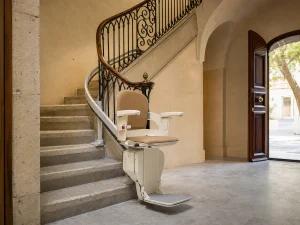
- Alternatives are being studied (lifting platforms, for example).
- Or an adapted facility is considered
But if there really is no technical solution, you can't demand the impossible.
Who pays for the lift installation?
Another big question.
The answer is clear: the community of owners.
The cost is divided among all residents according to their share of ownership.
And here's something important:
Even residents of ground-floor apartments or commercial premises may be required to pay, even if they do not use the lift.
Is it possible to vote against installing a lift?
Depends.
If the installation meets the mandatory accessibility requirements, the vote loses its weight. The community cannot block the project simply by voting against it.
However, if it is not mandatory, a board agreement is still required.
How much does it cost to install a lift in an old building?
There is no single figure, but in general terms:
- Standard installations: from €50,000 – €70,000
- Complex projects: can exceed €100,000
The price depends on:
- Available space
- Number of plants
- Lift type
- Need for additional works
In older buildings, the cost is usually higher due to the necessary adaptations.
Alternatives if a lift cannot be installed
When installing a traditional lift is not feasible, there are intermediate solutions.
Lifting platforms
More economical and adaptable to small spaces.
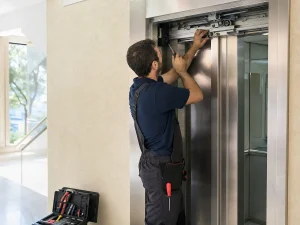
Lifts without machine room
They require less space and are easier to integrate.
Exterior solutions
In some cases, they are installed on facades or interior courtyards.
Every building is unique, and this is where professional advice makes all the difference.
Advantages of installing a lift in an old building
Beyond the legal obligation, there is a point that many communities overlook: the added value.
Installing a lift:
- Home values increase
- It facilitates the sale or rental
- It improves the quality of life.
- It makes the building more accessible to everyone
In areas like Mallorca, where the real estate market is very active, this can make a significant difference.
What steps are involved in installing a lift?
Although each case is different, the process is usually:
- Technical study of the building
- Estimate from a specialised company
- Board approval (if applicable)
- Application for aid or subsidies
- License processing
- Execution of the work
Having a specialised company simplifies this entire process.
Conclusion: It's not always mandatory, but it's becoming increasingly so.
Installing lifts in older buildings is no longer just a matter of convenience. It is increasingly becoming a necessity.
Not all cases require its installation, but when accessibility comes into play, the law is quite clear.
And beyond the regulations, there is an obvious reality:
Buildings without lifts are falling behind.
Therefore, if your community is considering this option, it's best to gather information and explore all the possibilities. Because in many cases, it's not just an obligation… it's a smart investment.
If you are thinking about installing a lift in Mallorca or to modernise your lift, contact us. At Eleva Balear, as lift company in Mallorca, we have extensive experience at your service.